
Views: 0 Author: Site Editor Publish Time: 2026-06-26 Origin: Site


Facility cooling represents a critical operational variable tied directly to employee productivity, equipment longevity, and strict OSHA compliance. Relying solely on basic comfort metrics ignores the serious implications of inadequate airflow. Selecting a Commercial Fan or industrial system carries significant stakes for your facility. Underspecifying equipment often leads to premature motor failure in harsh environments. Overspecifying wastes vital energy and strains facility infrastructure.
We designed this guide as a pragmatic, spec-driven framework for facility managers. You will learn how to evaluate, shortlist, and procure the perfect system based on environmental realities. Our approach ensures you prioritize lifecycle performance and continuous operational efficiency over short-term thinking. This methodology bridges the gap between raw airflow data and real-world deployment challenges.
Environment Dictates Build: The distinction between commercial and industrial fans lies in motor housing (e.g., TEFC), IP ratings, and duty-cycle capabilities, not just size.
Airflow vs. Acoustics: Balancing CFM (Cubic Feet per Minute) requirements with strict decibel (dB) limits is the primary challenge in commercial space deployments.
Installation is a Hidden Variable: Structural integrity, electrical phasing, and fire suppression clearances often dictate which fan technology is viable for a facility.
Lifecycle Efficiency Outweighs Initial Acquisition: Factoring in Variable Frequency Drive (VFD) efficiency and maintenance intervals prevents severe long-term procurement mistakes.
Operational duty cycles separate standard units from heavy-duty equipment. Commercial applications generally involve intermittent usage. You might run these units for 8 to 12 hours daily. Industrial environments demand rigorous continuous operation. Facilities often run them 24/7/365 without pausing. A standard motor will overheat under continuous industrial loads. You must match the duty cycle to your exact operational schedule to prevent catastrophic breakdowns.
Environmental severity dictates your minimum IP (Ingress Protection) ratings. Facilities battle dust, excess moisture, and corrosive airborne particulates daily. Standard motors feature open drip-proof designs. These fail rapidly when exposed to harsh particles. Severe environments require washdown-rated or explosion-proof motors. Totally Enclosed Fan Cooled (TEFC) motors prevent internal contamination. Food processing plants require IP69K ratings for high-pressure sanitation.
Material construction differentiates basic aesthetic designs from rugged workhorses. Commercial-grade aesthetics utilize lightweight components and plastics. They look visually appealing in retail spaces but lack structural rigidity. Heavy-duty environments require heavy-gauge steel and reinforced aluminum alloys. You also need sealed bearings to prevent friction failures. Industrial environments quickly destroy equipment lacking proper structural reinforcements.
Feature | Commercial Grade | Industrial Grade |
|---|---|---|
Duty Cycle | 8–12 Hours / Intermittent | 24/7/365 / Continuous |
Motor Enclosure | Open Drip Proof (ODP) | TEFC / Washdown / Explosion-Proof |
Materials | Lightweight aluminum, plastics | Heavy-gauge steel, reinforced alloys |
Environment | Clean, climate-controlled | Dusty, wet, corrosive, high-heat |
Different spaces require distinct airflow delivery mechanisms. You must align the technology with your structural layout. Applying the wrong aerodynamic profile drastically reduces overall effectiveness.
These massive units dominate large, unobstructed footprints. Warehouses, distribution centers, and big-box retail spaces benefit immensely. They utilize advanced airfoil profiles to move massive columns of air. They provide excellent destratification during winter months. This pushes trapped warm air down from the ceiling to the floor. Their primary value proposition involves massive airflow at extremely low operating energy. They create perceived cooling effects without generating disruptive high-velocity drafts.
Some facilities face high-static pressure environments. Complex ducted systems restrict natural air movement significantly. Centrifugal blowers excel in these restricted scenarios. They feature specialized backward-inclined or forward-curved blades. They are best for targeted exhaust or hazardous fume extraction. Their value proposition centers on precision airflow delivery against heavy resistance. They also offer aggressive particulate handling capabilities for welding shops and chemical plants.
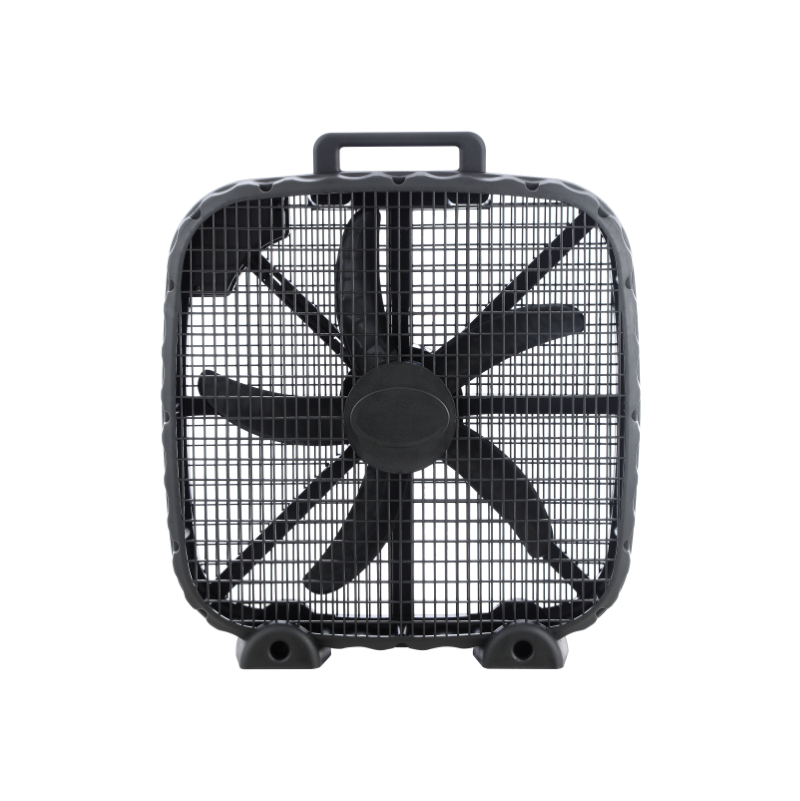
Dynamic workspaces require flexible cooling solutions. Directional and portable units serve spot cooling needs perfectly. Loading docks and manufacturing lines see constant layout changes. These units provide immediate plug-and-play deployment anywhere on the floor. They offer localized heat stress mitigation for line workers immediately. They require zero structural installation configurations. You simply roll them into position and supply standard power.
You need objective metrics to evaluate system performance. Relying on basic diameter measurements leads to improper sizing. We rely on strict engineering formulas to guarantee success.
Calculating true volume requirements demands careful math. You must evaluate facility square footage and ceiling height. Multiply length, width, and height to find total cubic volume. Next, determine your required Air Changes per Hour (ACH). Baseline heat loads from heavy machinery and personnel alter this requirement. Multiply the volume by the ACH target. Divide that number by 60 to find your required CFM. This ensures you supply adequate fresh air consistently across all zones.
Airflow generation creates inevitable mechanical and wind noise. Navigating noise thresholds remains a vital engineering challenge. Retail or customer-facing commercial spaces demand strict decibel (dB) limits. High noise levels disrupt communication and customer experiences. Industrial environments permit higher baseline noise limits. However, you must still comply with OSHA acoustic exposure regulations. Evaluating decibel outputs at maximum RPM is mandatory before procurement.
Motor technology dictates long-term energy consumption. Evaluating standard AC motors provides a baseline expectation. AC motors represent the "Good" tier for basic, intermittent needs. Electronically Commutated Motors (ECM) represent the "Better" and "Best" tiers. Direct Drive systems eliminate gearboxes entirely. They drastically increase energy efficiency and eliminate maintenance-heavy oil leaks. They also offer significant operational simplification over a decade of continuous use.
Manufacturer claims often exaggerate optimal laboratory performance. You need verified data to make informed decisions. Rely on AMCA (Air Movement and Control Association) certified performance data. AMCA certification guarantees the unit delivers the stated CFM in real-world conditions. It also verifies acoustic ratings under standardized testing protocols. This protects your facility from underperforming equipment and false marketing claims.
Procuring the hardware only solves half the cooling equation. Installation logistics dictate the ultimate success of your deployment. Ignoring physical constraints leads to failed safety inspections.
Overhead installations place significant stress on building infrastructure. You must assess roof and I-beam load capacities carefully. Dynamic torque during startup creates momentary structural strain. Facilities must also calculate exact drop-height requirements. Blades need sufficient clearance from the ceiling to draw air downwards. Improper mounting heights severely throttle overall aerodynamic performance. We strongly recommend implementing guy-wire stabilization to prevent dangerous lateral swaying.
Power availability restricts your equipment choices. Verify your facility voltage and phase availability early. Commercial spaces often run on single-phase power setups. Heavy industrial units typically require robust three-phase connections. You must also plan Variable Frequency Drive (VFD) controller placement. Controllers need accessible locations for daily operational adjustments. They require shielding from excessive environmental heat and electromagnetic interference (EMI).
Safety regulations shape every overhead installation project. You must navigate strict clearances for ESFR (Early Suppression Fast Response) sprinkler systems. NFPA 13 mandates specific distances between blades and sprinkler heads. Facilities using overhead cranes face additional airspace conflicts. Ground-level equipment requires proper OSHA guard compliance. Grilles must prevent accidental contact with spinning components. Compliance prevents catastrophic accidents and regulatory fines.
Cooling equipment should complement existing infrastructure perfectly. Map your placement to work alongside HVAC ducting. Improper placement disrupts established thermostat zones. It can trick automated sensors into reading inaccurate ambient temperatures. Strategic placement distributes conditioned air evenly across the floor. This synergy reduces the overall workload on your main compressors. It maximizes the efficiency of your primary environmental control systems.
Strategic procurement focuses on the total operational lifespan. Short-term thinking leads to recurring maintenance frustrations. You must evaluate the long-term impact of your hardware choices.
Model the return on investment for premium models. High-efficiency systems require a larger initial capital allocation. However, they deliver compounding energy savings over time. They also reduce the strain on existing HVAC loads. Project these savings over a 5-to-10-year operational horizon. Efficient units frequently pay for themselves through drastically reduced utility usage. Selecting a robust Industrial Fan with ECM technology maximizes this long-term value.
Evaluate the fine print of every manufacturer agreement. Differentiate between basic limited parts warranties and comprehensive coverage. Basic warranties often exclude expensive labor components. Comprehensive coverage includes labor and complete motor replacement. Robust vendor support guarantees faster resolution during unexpected failures. It minimizes facility downtime during peak summer months. Every Fan procurement must include a clear service level agreement.
Follow a structured approach to narrow down your options efficiently.
Audit facility constraints: Document your structural, electrical, and environmental limitations first. Involve your maintenance team in this audit.
Define minimum spec thresholds: Establish your non-negotiable CFM, IP rating, and decibel limits based on the audit.
Request airflow mapping: Ask vendors for localized airflow simulations specific to your floor plan and machinery layout.
This methodical process eliminates guesswork entirely. It forces vendors to prove their equipment works in your specific environment.
Do not guess your facility requirements. Request a professional site assessment from qualified engineers. Alternatively, use a verified CFM calculator to narrow down exact SKUs. Precision data ensures you install the optimal solution the first time. Take proactive steps to map your structural layout before contacting suppliers.
Successful facility cooling requires a highly analytical approach. You must bridge the gap between raw airflow data and daily operational realities. Every facility presents a unique combination of structural and environmental challenges. Prioritize long-term durability and verifiable performance metrics over the lowest initial specification tier. Verified compliance with safety standards protects your personnel and infrastructure. Taking a methodical, spec-driven approach guarantees exceptional environmental control for years to come. Act now to audit your floor plan and establish your performance baseline.
A: No. Commercial units lack the necessary IP ratings and heavy-duty components. Using them in harsh environments leads to rapid motor failure. Unsealed bearings deteriorate quickly when exposed to industrial dust and moisture. The constant need for replacements completely negates any initial savings.
A: You can determine baseline needs using a standard formula. Multiply the volume of your space by the desired air changes per hour. Divide that total by 60 to find the CFM. Remember that layout obstructions, machinery heat, and tall racks will alter real-world requirements.
A: It depends entirely on your specific application. HVLS units provide highly efficient, uniform cooling over large open spaces. They consume very little energy. Smaller directional units excel at targeted, high-velocity cooling. They are ideal for dynamic workstations and congested loading docks.
A: They can if installed improperly. NFPA requirements dictate strict minimum clearances between blades and sprinkler heads. Most fire codes also require specialized shutdown relays. These relays automatically cut power to the unit when the fire alarm triggers, preventing the disruption of sprinkler patterns.

