
Views: 0 Author: Site Editor Publish Time: 2026-09-24 Origin: Site


Are you dreading the arrival of that massive summer electricity bill? I see this panic every season. As seasonal temperatures climb, the financial burden of keeping your living space comfortable skyrockets right alongside them. Air conditioners are notorious energy hogs. They dominate residential power consumption and consistently strain local grids during peak months.
This harsh reality leads budget-conscious homeowners—and even those of us in the HVAC field—to ask a critical question. Can a simple fan actually provide enough relief to justify turning off the AC? In this breakdown, we will compare the exact operational expenses of both appliances. By analyzing real-world wattage differences, thermodynamic principles, and practical daily usage, you will discover exactly which cooling method aligns with your budget without sacrificing comfort.
Massive Wattage Difference: A standard window air conditioner consumes between 1,000W and 1,500W. A modern tower fan uses approximately 95% less electrical energy.
Drastic Cost Savings: Running a fan continuously costs just pennies a day. In stark contrast, relying solely on an AC unit can add hundreds of dollars to your monthly utility expenditure.
Distinct Cooling Mechanisms: Air conditioners physically lower the ambient temperature of an enclosed space. Fans, however, create a localized wind-chill effect that cools your body directly through rapid moisture evaporation.
The Hybrid Approach: Combining targeted airflow with your AC allows you to raise the thermostat setting. This simple adjustment can save up to 15% on overall cooling costs while maintaining an ideal indoor climate.
Before diving into the underlying science, it is worth noting a massive shift in the cooling industry. Recent energy market analyses reveal a clear trend. As global electricity rates surge by an average of 8% to 12% annually, consumers are aggressively pivoting away from centralized, high-consumption cooling. The market is moving rapidly toward localized, high-efficiency airflow systems. Grid operators are even encouraging "hybrid cooling" setups to prevent rolling blackouts during summer heatwaves. This approach is no longer just a frugal hack; it is becoming the standard for modern, sustainable home climate management.
To accurately evaluate operational expenses, we first need to look at the thermodynamics. Comparing these two devices requires understanding exactly how they interact with the air inside your home and how they affect the human body.
Fans do not actually lower the ambient temperature of a room. If you place a thermometer in a sealed, 85-degree room with a running fan, the temperature remains exactly at 85 degrees. Instead, these devices cool you through a biological process. When air circulates rapidly across your skin, it accelerates the evaporation of natural sweat.
Evaporation is an endothermic process. It absorbs heat. This rapid moisture loss pulls thermal energy directly away from your skin. Meteorologists call this the "wind-chill effect." It makes you feel significantly cooler than the actual room temperature. This targeted airflow is highly effective for personal comfort, provided the breeze is directed properly.
An air conditioner actively alters the indoor climate. It utilizes a mechanical refrigeration cycle involving a heavy-duty compressor, condenser, evaporator coils, and chemical refrigerants. The unit draws in warm indoor air. It passes that air over freezing evaporator coils to extract sensible heat and humidity, then forcefully pushes the chilled air back into the room.
Simultaneously, the absorbed heat is pumped outside. This mechanical process is incredibly effective at cooling large spaces. However, the sheer amount of energy required to run the compressor and internal blowers is precisely why air conditioners draw massive amounts of electricity.
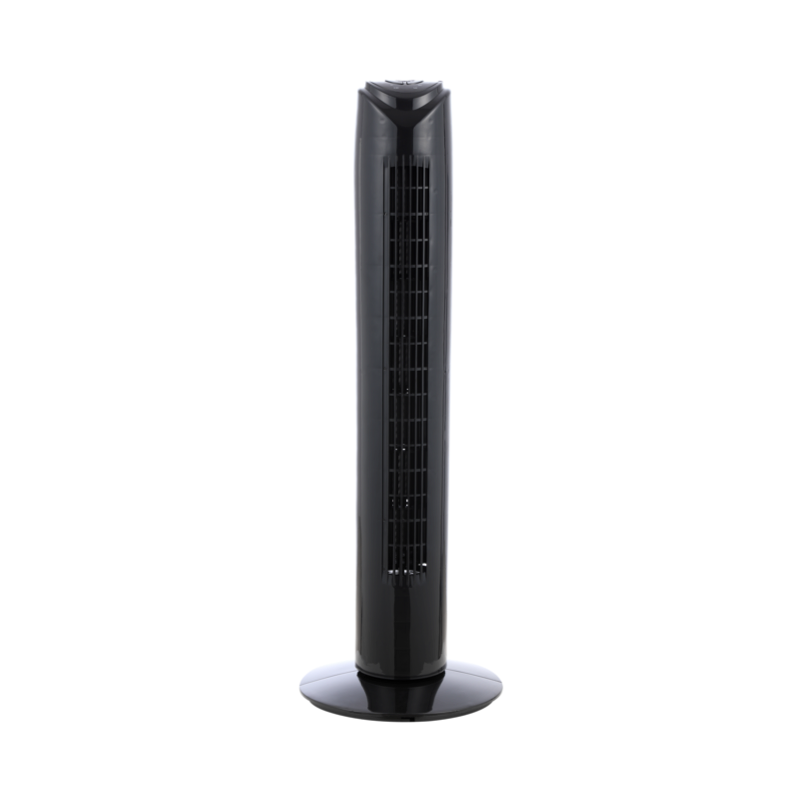
Understanding the science naturally leads us to the power draw of each appliance. Electrical consumption is measured in Watts (W). When you utilize 1,000 watts of power for one hour, that equals one Kilowatt-hour (kWh). This is the standard metric utility companies use to calculate your bill.
Because AC units must power heavy mechanical compressors to manipulate pressurized refrigerants, their energy requirements are substantial. Small window units typically draw 500W to 800W. Standard window units demand 1,000W to 1,500W. Central air conditioning systems can easily exceed 3,500W.
In stark contrast, a fan only needs to power a small internal motor to spin a lightweight cylindrical impeller. There is no compressor or chemical refrigerant involved. Consequently, the energy footprint is remarkably small. For instance, a standard 50W electric tower fan operates at a mere fraction of the power required by even the smallest AC unit.
To put this vast discrepancy into perspective: running a single 1,500W window AC draws the exact same amount of electricity as running thirty 50W fans simultaneously. This gaping difference in wattage drives the shocking cost differences on your summer utility statements.
Grasping the wattage difference is only half the battle. To see the real-world financial impact, we must convert those watts into actual dollars. For these calculations, we will apply the current average United States residential electricity rate of approximately $0.16 per kWh.
Imagine using a standard 1,500W (1.5 kW) window AC to cool a primary bedroom. You run it for 8 hours every night while sleeping. The daily energy use equates to 12 kWh (1.5 kW multiplied by 8 hours). At a rate of $0.16 per kWh, your daily cost sits at $1.92. Over a standard 30-day billing cycle, that single window unit will cost you $57.60 per month.
Keep in mind, this calculation accounts for just one room. If your household relies on a central AC system, that monthly figure easily scales into the hundreds of dollars, creating severe budget strain.
Now, let us run the exact same 8-hour overnight scenario using a highly energy efficient electric tower fan drawing a modest 50 watts (0.05 kW). The daily energy use drops drastically to just 0.4 kWh per day. Multiplying that by the $0.16 rate results in a daily cost of roughly 6 cents. Stretched over a 30-day month, the total operational cost is a mere $1.92.
The ultimate takeaway is staggering. Running a fan for an entire month costs the exact same as running a standard window air conditioner for a single day.
Appliance | Wattage | Daily kWh (8 Hours) | Daily Cost (@ $0.16/kWh) | Monthly Cost (30 Days) |
|---|---|---|---|---|
Window AC | 1,500W | 12.0 kWh | $1.92 | $57.60 |
Central AC | 3,500W | 28.0 kWh | $4.48 | $134.40 |
Tower Fan | 50W | 0.4 kWh | $0.06 | $1.92 |
While the mathematical breakdown heavily favors the fan, cost is not the only factor. Both appliances possess distinct operational limitations that must be weighed objectively against your specific living situation.
Beyond ultra-low running costs, these devices offer incredible portability. They are lightweight and plug into any standard outlet. You can easily move them from your home office during the workday to your bedroom at night. Furthermore, their vertical footprint fits seamlessly into tight corners. The lack of a loud mechanical compressor provides a gentle white noise highly conducive to deep sleep.
The primary drawback is their inability to lower ambient room temperatures. If your living room is sweltering at 90°F, the appliance simply circulates 90°F air. Additionally, when indoor humidity levels become exceptionally high, human sweat cannot evaporate efficiently. Under extreme conditions, blowing hot, sticky air across your body offers minimal relief.
Air conditioning units remain the only reliable method to physically lower the temperature while simultaneously extracting oppressive humidity. During severe heatwaves, this capability elevates the AC from a luxury to a health necessity. However, these benefits come with exorbitant running costs, high upfront purchase prices, and expensive annual maintenance.
Frugal living does not mean suffering through sweltering heat. Objective thermal dynamics suggest that stopping the binary "either/or" thinking is the key to managing your bills. Using both appliances in tandem is a proven method for maximizing comfort and savings.
When you run an air conditioner, cold air often pools near the floor or stays trapped near the vent. This leaves other parts of the room uncomfortably warm. By strategically placing a low power oscillating tower fan near the AC vent, you mechanically force that dense, chilled air into distant corners. This sweeping motion breaks up thermal layers. The room reaches the target temperature much faster, allowing the power-hungry compressor to cycle off sooner.
The true financial magic lies in adjusting your thermostat. Because the localized breeze creates a wind-chill effect, the room feels significantly cooler than it actually is. If you normally set your AC to 72°F, you can easily raise it to 76°F while the fan is running. You will feel equally comfortable, but your AC will work far less. Energy experts estimate that for every degree you raise your thermostat above 72°F, you save roughly 3% to 5% on AC running costs. A 4-degree adjustment combined with targeted airflow easily yields a net savings of 10% to 15% on your monthly bill.
If you are ready to integrate supplementary airflow into your cooling strategy, selecting the right hardware is crucial. Not all units are manufactured with the same efficiency standards. Specific internal components dictate your return on investment.
When reviewing specifications, look closely at the motor type. Traditional models utilize Alternating Current (AC) motors. Conversely, high-end modern units frequently utilize Direct Current (DC) motors. DC motors convert electrical energy into mechanical energy much more efficiently. They often use up to 70% less electricity than their AC counterparts and operate with significantly less friction, resulting in whisper-quiet cooling.
A static breeze only benefits the person sitting directly in front of the unit. If you are cooling a living room with multiple family members, a broad oscillation feature is mandatory. Look for an oscillating unit that sweeps air across a 70-degree to 90-degree arc. The vertical blade assembly pushes a continuous column of air from the floor to torso height, providing comprehensive body cooling without drawing extra wattage.
The easiest way to waste electricity is running an appliance when the room is empty. Modern control features provide a measurable financial return here. Look for models equipped with programmable auto-off timers. Specifically, a 32-inch tower fan with remote allows you to adjust speeds or power down the unit without leaving your bed. Advanced "Eco-modes" can even automatically decrease the fan speed as the ambient room temperature naturally drops overnight.
Deciding between centralized cooling and localized airflow requires a realistic assessment of your local climate and daily habits. Prioritize the fan when the outdoor temperature is mild to moderately warm (below 85°F) and humidity levels are manageable. In these conditions, the evaporative wind-chill effect is more than sufficient. Furthermore, if you only need personal cooling while working alone in a home office, cooling the entire house is highly illogical. The fan is the objectively superior financial choice.
Reserve the air conditioner for severe heatwaves exceeding 90°F or environments with thick, oppressive humidity. Because fans cannot extract moisture from the air, relying on them in 80% humidity will not prevent heat-related discomfort. In extreme scenarios, the high running cost of an AC is simply a necessary expense.
Cooling your home during the sweltering summer months does not have to drain your wallet. By understanding wattage differences and thermodynamics, you can take control of your utility bills. Utilizing a low-wattage fan on mild days, and pairing it with your AC via the hybrid thermostat strategy on exceptionally hot days, offers the perfect balance of frugality and comfort.
The return on investment for purchasing high-quality airflow equipment is incredibly fast. The appliance typically pays for itself in electricity savings within the very first month. Ready to optimize your home's cooling efficiency? Explore the full range of high-performance, energy-saving options at FSW Insight to find the perfect match for your space, ensuring you stay comfortable while keeping more money in your bank account.
No, it does not. The electricity consumption is minimal compared to refrigeration-based cooling appliances. A standard 50W unit uses exactly 50 watts per hour. If you run it continuously for 24 hours, it consumes only 1.2 kilowatt-hours (kWh) of electricity. Based on the average US rate of $0.16 per kWh, running it all day and night costs approximately 19 cents. Over a 30-day month of non-stop operation, the total cost remains under $6.00.
This depends entirely on your local climate. In dry, mild, or moderately warm climates, a high-quality fan easily serves as a standalone cooling solution. It provides ample comfort through the wind-chill effect while saving substantial money. However, in regions experiencing extreme heat (above 90°F) accompanied by high humidity, it cannot replace an AC. Fans do not alter the chemical properties of the air; they cannot lower ambient temperatures or extract moisture.
From a purely thermodynamic perspective, neither style actually "cools" a room—they simply move existing air. However, they deliver airflow differently. Pedestal fans push a concentrated, powerful cone of air in one specific direction. Vertical models utilize an internal impeller system that distributes a wider, more even column of air from the floor up to torso height. Many users find this vertical distribution much more comfortable for full-body cooling.
The running costs of both appliances are incredibly low and nearly identical. A standard residential ceiling fan typically consumes between 30W and 75W depending on the speed setting. A portable unit generally consumes between 40W and 60W. Therefore, the hourly operational cost for either option is just fractions of a penny. The main difference lies in the upfront cost; a portable unit can be purchased affordably and plugged in immediately, whereas a ceiling fan requires a higher initial purchase price and electrical installation.
Sizing depends on the square footage of the space and the height of your furniture. For small bedrooms or home offices, a compact 14-inch to 29-inch model provides adequate personal airflow. For larger living rooms, opt for a 32-inch or taller model with a wide 90-degree oscillation angle to ensure the breeze reaches across the entire seating area without being blocked by couches or beds.
Yes. While primarily used for summer cooling, placing a unit on a low setting near a heating vent during winter helps distribute warm air more evenly throughout the room. This mechanical circulation prevents hot air from stagnating near the ceiling, potentially reducing your overall heating costs by helping your furnace work more efficiently.

