
Views: 0 Author: Site Editor Publish Time: 2026-09-17 Origin: Site


You are finally drifting off to sleep. Suddenly, the mechanical rattling of a metal fan grille jolts you awake. Sound familiar? Or maybe you are a parent, constantly watching your toddler reach for fast-spinning blades. Traditional cooling methods work fine for open patios or garages. However, they often introduce noise, safety hazards, and airborne dust into our most intimate indoor spaces.
A modern bladeless tower fan solves these specific climate control problems. By reimagining how air is circulated, these sleek appliances offer a sophisticated alternative to legacy designs. In this guide, we will look under the hood of these devices from an engineering perspective. Ultimately, you will understand their unique benefits for sleep optimization, child safety, and respiratory health.
Ultimate Safety: The enclosed motor design completely eliminates the risk of injured fingers, making it the undisputed top choice for infant nurseries and homes with pets.
Whisper-Quiet Sleep: The absence of external chopping blades provides a smooth, quiet breeze that acts as gentle white noise for uninterrupted rest.
Hassle-Free Maintenance: A seamless exterior requires just a simple wipe-down, significantly reducing dust buildup and aiding allergy sufferers.
Ultimate Convenience: Adjust your bedroom climate effortlessly using remote controls and smart sleep timers without ever leaving your mattress.
Despite the futuristic name, these devices are not entirely without blades. The term "bladeless" simply means there are no visible, external moving parts. To understand why this design excels in indoor environments, we need to examine the hidden mechanics. The impeller blades are tucked safely inside the base of the unit, creating a completely different airflow dynamic compared to standard pedestal fans.
From an engineering standpoint, the core mechanism relies on air multiplier technology. A highly efficient, brushless DC (BLDC) motor sits in the heavy base. It drives an asymmetrical impeller. This internal component aggressively draws air in from the surrounding room through small, perforated intake vents.
Once trapped inside the base, the air is forced upward into a hollow ring or a vertical slit in the tower. As the air squeezes through this narrow channel, it creates a localized area of low pressure. According to the principles of fluid dynamics, surrounding ambient air is naturally drawn into this low-pressure stream. Engineers call this process "entrainment." It effectively multiplies the initial volume of air, projecting a continuous, smooth stream outward into the room.
This aerodynamic design fundamentally changes how a room feels. Traditional fans chop the air. They create a turbulent, uneven breeze that causes buffeting and mechanical vibration. By utilizing a continuous airflow system, aerodynamic resistance drops significantly. Consequently, this maximizes airflow efficiency while simultaneously lowering energy consumption. For indoor spaces where consistent temperature control and acoustic management are daily priorities, this streamlined approach is a massive upgrade over conventional mechanical cooling.
Looking at recent shifts in the home appliance market, there is a clear trend toward "wellness-centric" climate control. Consumers are no longer just looking for raw cooling power. Instead, industry data shows a surging demand for appliances that actively support sleep architecture and indoor air quality. Manufacturers are responding by abandoning bulky mechanical designs. The focus has shifted heavily to acoustic engineering, low-decibel operation, and smart integration, transforming standard bedrooms into holistic wellness sanctuaries.
One of the most persistent complaints about standard room fans is the mechanical rattling. For light sleepers, sudden shifts in these noise levels can easily disrupt the rapid eye movement (REM) sleep cycle. Because the motor of a bladeless unit is housed deep within an acoustically dampened casing, mechanical noise is drastically muffled. The result? A consistent, low-decibel hum that blends seamlessly into the background. It acts as gentle white noise, providing thermal comfort without auditory distraction.
Standard fans produce a choppy breeze that hits the body in turbulent waves. In practice, this uneven distribution causes rapid fluctuations in skin temperature. You might wake up feeling overly chilled or with dry eyes and nasal passages. Air multiplier technology, on the other hand, delivers a steady, uninterrupted airflow. This smooth breeze creates a gentle wind-chill effect, allowing your body to regulate its core temperature naturally overnight.
Bedrooms often have limited floor space, especially when accommodating large beds and dressers. Bulky pedestal fans with wide circular cages easily become tripping hazards in the dark. Conversely, a sleek, vertical design allows modern cooling units to fit neatly into tight corners. Beyond mere functionality, their minimalist aesthetic complements modern interior decor, ensuring the appliance elevates rather than clutters your personal space.
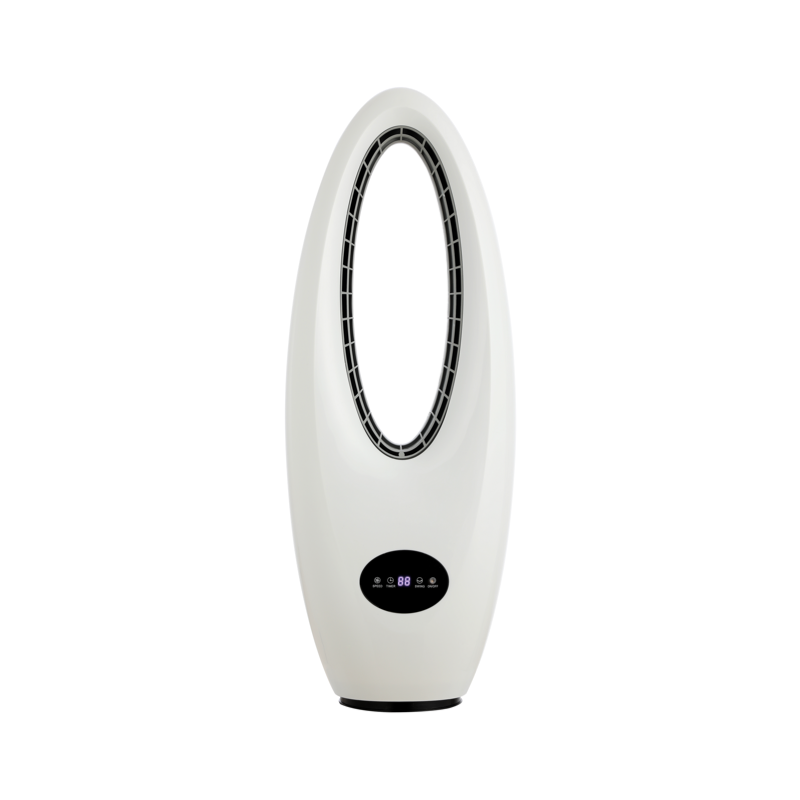
For parents, introducing any new appliance into a nursery requires a strict hazard evaluation. Standard fans present multiple, well-documented risks to curious toddlers. Integrating a child safe bladeless tower fan directly addresses these anxieties through superior structural engineering and thoughtful safety features.
The primary safety advantage is the absolute elimination of fast-moving, exposed parts. Toddlers are naturally curious. They are instinctively drawn to the spinning motion of traditional blades. Standard fan grilles, even those with narrow spacing, can flex enough to allow small fingers to slip through. By hiding the impeller deep within the sturdy base, the physical hazard vanishes. Parents gain profound peace of mind knowing that infants and household pets can safely touch the exterior without any risk of harm.
Infants are highly responsive to their acoustic environment. Complete silence can actually be jarring for a newborn, contrasting sharply with the constant sounds of the womb. The internal motor of a bladeless model produces a steady, low-frequency hum. This sound acts as highly effective white noise, masking sudden household disruptions like a dropping pan or a barking dog. Consequently, this consistent auditory backdrop helps babies fall asleep faster and stay asleep longer.
Safety in a nursery extends well beyond moving parts. Physical stability is equally crucial. Traditional pedestal fans are notoriously top-heavy, making them prone to tipping over if a child bumps into the stand. Modern tower models are engineered specifically with a low center of gravity. The heaviest component—the motor—is located at the very bottom. This bottom-heavy architecture, combined with a wide footprint, significantly reduces the risk of the unit toppling over during active play.
When evaluating home cooling appliances, consumers frequently overlook the long-term hygiene implications of their purchase. Traditional box fans are notorious for accumulating significant amounts of dust, pet dander, and airborne particles along the leading edges of their blades. For individuals prioritizing respiratory health, an easy clean bladeless tower fan offers a scientifically sound alternative that drastically reduces indoor air pollution risks.
The fundamental structural flaw of a traditional fan lies in its exposed mechanical components. To clean one thoroughly, you must unscrew the front grille, unclip the blade assembly, wash the parts, dry them to prevent rust, and carefully reassemble them. Because this chore is highly tedious, many households simply neglect it. Over time, these fans essentially become allergen dispensers.
In stark contrast, a bladeless model conceals its primary impeller. The visible portion contains no moving parts, meaning there are no complex cages or angled blades for dust to cling to. Maintaining the exterior requires minimal physical effort, fundamentally changing how households approach appliance hygiene.
Indoor air quality is a critical factor for healthy sleep. For asthma and allergy sufferers, the continuous circulation of dust mites and pollen can trigger nighttime congestion and coughing. Bladeless tower fans mitigate this issue through their smooth airflow delivery. Because the external loop remains clean, the technology projects a consistent breeze without the added payload of household dust. Furthermore, many premium models integrate secondary filtration systems at the air intake base, capturing larger particles before they can be accelerated into the room.
The practical benefit of this streamlined design is the sheer speed of maintenance. To maintain optimal hygiene, follow this simple, empirical cleaning protocol:
Disconnect Power: Always unplug the unit from the electrical outlet prior to cleaning.
Wipe the Exterior Loop: Utilize a slightly damp microfiber cloth to wipe the inner and outer surfaces of the aerodynamic loop. Microfiber effectively traps residual surface dust without the need for harsh chemical solvents.
Vacuum the Base Intake: Use a soft brush attachment on your vacuum cleaner to gently clear any lint or pet hair from the small air intake vents located at the base of the tower.
This entire process takes less than a minute, ensuring your cooling system remains sanitary with virtually zero hassle.
Modern sleep hygiene relies heavily on uninterrupted rest. Waking up in the middle of the night because the room has become too cold disrupts the REM cycle, leading to grogginess the following morning. Integrating a bladeless tower fan with remote into your bedroom setup provides precise environmental control. It allows you to manage your thermal comfort without physically leaving the covers.
Human body temperature naturally fluctuates during the sleep cycle, typically dropping in the early hours of the morning. A cooling breeze that felt perfectly refreshing at 10:00 PM might feel uncomfortably chilly by 3:00 AM. A dedicated remote control empowers users to adjust fan speeds instantly from their mattress. This immediate accessibility prevents you from fully waking up, walking across a dark room, and manually pressing buttons, thereby preserving the continuity of your rest.
Energy efficiency and nighttime comfort are further enhanced by intelligent sleep timers. Most high-quality bladeless models allow users to program an auto-shutoff sequence, typically ranging from one to twelve hours. For parents managing a nursery, this feature is invaluable. You can set the fan to provide a gentle white noise while the infant falls asleep, programming it to turn off automatically once the ambient temperature of the house drops overnight. This prevents the room from becoming excessively cold and reduces unnecessary electricity consumption.
Standard fans usually offer a rigid, localized stream of air. Conversely, advanced bladeless tower fans utilize internal oscillation mechanisms that rotate the entire upper loop. This distributes a laminar flow of air evenly across the entire room. Through the remote control, users can toggle this oscillation on or off. Additionally, many units feature a "Natural Breeze" mode. This uses algorithmic motor control to randomly vary the airflow intensity, simulating the organic ebb and flow of outdoor wind.
When finalizing a purchasing decision for a bedroom or nursery, you must objectively evaluate the functional differences between cooling technologies. While traditional pedestal fans effectively move air, their mechanical design introduces specific drawbacks in intimate, quiet spaces. For those conducting a thorough floor standing fan vs tower fan comparison, examining empirical metrics like decibel output, safety features, and long-term value is absolutely essential.
The acoustic profile of a fan is arguably the most critical factor for sleep environments. Traditional fans generate noise through two distinct mechanisms: the mechanical whir of the exposed motor and the aerodynamic "buffeting" caused by rigid blades chopping through the air. Bladeless fans eliminate blade buffeting entirely, resulting in a smoother, more consistent sound profile.
Fan Type | Average Noise Level (Low Speed) | Average Noise Level (High Speed) | Sound Profile Characteristic |
|---|---|---|---|
Traditional Box Fan | 45 - 50 dB | 65 - 70 dB | Choppy, mechanical rattling, uneven humming. |
Standard Pedestal Fan | 40 - 45 dB | 60 - 65 dB | Noticeable blade buffeting, motor vibration. |
Bladeless Tower Fan | 30 - 35 dB | 50 - 55 dB | Smooth, continuous airflow, gentle white noise. |
Note: A 10 dB reduction represents a sound that is perceived by the human ear as approximately half as loud. Therefore, a bladeless fan operating at 30 dB is significantly quieter than a pedestal fan at 40 dB.
As previously established, safety is non-negotiable in homes with young children. Traditional fans feature wide grates that small fingers can easily penetrate. Furthermore, top-heavy pedestal fans present a distinct tipping hazard for toddlers learning to walk. Bladeless tower fans feature a low center of gravity and zero exposed moving parts, objectively classifying them as the safer alternative. Maintenance-wise, the elimination of the disassembly requirement makes bladeless models vastly superior for maintaining household hygiene.
Consumers often note that bladeless technology carries a higher initial purchase price compared to standard plastic fans. However, this cost must be contextualized within its long-term value. Bladeless fans typically utilize highly efficient BLDC motors, which consume less electricity and boast a longer operational lifespan than traditional AC motors. When factoring in the durability, the superior safety profile for children, and the tangible improvement in sleep quality, the return on investment becomes highly favorable.
Selecting the optimal cooling unit requires matching the appliance's specifications to the physical dimensions and specific use cases of your room. A fan that works perfectly in a compact nursery might lack the volumetric output required for a spacious master suite.
Airflow capacity is technically measured in Cubic Feet per Minute (CFM). However, a practical way to size your fan is by height and intended reach.
For nurseries and small bedrooms (up to 150 sq. ft.), a compact 28-inch model is highly recommended. The primary goal here is gentle air circulation over a crib rather than high-velocity cooling. For master bedrooms or hotel rooms, this 28-inch form factor also works perfectly when placed on a nightstand or low dresser. This positioning ensures the elongated air loop aligns directly with the height of a standard mattress, delivering the breeze right to you rather than blowing harmlessly at the floor.
To ensure you are maximizing your investment, evaluate potential models against this objective feature checklist:
Remote Control Functionality: Essential for adjusting settings without disrupting your sleep cycle.
Variable Speed Settings: Look for models with at least 8 to 10 micro-adjustments rather than a basic "Low/Medium/High" switch, allowing for precise thermal regulation.
Dimmable LED Displays: A bright digital display can disrupt the production of melatonin. Ensure the fan features a "Sleep Mode" that automatically dims or turns off the control panel lights.
Quiet Oscillation: Verify that the internal rotation mechanism is engineered to operate silently, without the clicking or grinding noises common in cheaper appliances.
Sturdy Base Design: For child safety, the base should be wide and weighted to prevent accidental tipping.
A bladeless tower fan fundamentally transforms your bedroom cooling experience. By replacing turbulent, noisy blades with aerodynamic air multiplier technology, it provides unmatched safety for young children and curious pets.
Whisper-quiet acoustic engineering ensures you sleep completely uninterrupted. Meanwhile, the hassle-free, wipe-clean exterior helps maintain excellent indoor air quality. While standard heavy-duty fans remain useful for large, open spaces like garages, bladeless models completely dominate intimate living spaces where comfort is paramount.
If you are ready to upgrade your home climate control system, prioritize appliances that blend acoustic engineering with smart features. Explore the reliable, high-performance options available at FSW Insight to find the perfect bladeless tower fan for your specific household or hotel needs. Enjoy a safer, cleaner, and quieter breeze every single night.
It is important to understand the physics of cooling. Fans do not actively lower the ambient temperature of a room like an air conditioning unit does. Instead, fans cool people by accelerating the evaporation of moisture on the skin, creating a wind-chill effect. Bladeless tower fans perform this function exceptionally well because they generate a laminar, continuous stream of air. This smooth airflow feels more consistent and comfortable against the skin compared to the choppy air produced by standard bladed fans.
Yes. The defining characteristic of these units is the complete removal of exterior moving parts. The primary motor and the impeller blades are securely housed deep within the structural base, completely inaccessible to small fingers, hair, or pet paws. Additionally, the exterior loop does not heat up during operation, and many models feature a weighted base to prevent the unit from tipping over if a toddler bumps into it.
For individuals with respiratory sensitivities, dust allergies, or simply a busy schedule, the investment is highly justified. Traditional fans require you to dismantle metal grates and individually scrub delicate blades—a process that is often neglected, leading to dust being blown around the bedroom. A bladeless fan requires only a quick wipe of the exterior loop with a microfiber cloth, ensuring your indoor air remains clean and saving you significant maintenance time.
Yes, the vast majority of modern units are designed specifically with bedroom use in mind. A quality model will feature a dedicated sleep mode. When activated, this mode not only lowers the fan speed to its quietest decibel setting but also dims or completely extinguishes the LED display lights on the base. This prevents artificial light pollution in your bedroom, supporting natural melatonin production and deep sleep.
No, they are generally very energy-efficient. Most premium bladeless tower fans utilize Brushless DC (BLDC) motors. These motors are engineered to minimize friction and heat loss, meaning they draw significantly less wattage than traditional AC motors found in older box or pedestal fans. Even when running throughout the night, the impact on your monthly utility bill is minimal.
While a standard bladeless fan is primarily designed for air circulation, many modern units now feature built-in filtration systems. These hybrid models incorporate HEPA filters at the base intake, capturing dust, pollen, and pet dander before the air is multiplied and projected into the room. If allergies are a major concern, checking the product specifications for integrated air purification features is highly recommended.

