
Views: 0 Author: Site Editor Publish Time: 2026-06-16 Origin: Site


The transition toward stringent global energy standards like ERP and DOE forces engineers and procurement teams to rethink standard ventilation components. Upgrading an Electric Fan is no longer just an afterthought. Modern regulations demand superior energy efficiency and lower power consumption. While the initial bill of materials heavily favors traditional AC technology, rising demand for smart home integration makes motor selection critical. Consumers expect low acoustic profiles and connected features.
Choosing the right motor architecture is a vital product roadmap decision. It shapes future regulatory compliance and market positioning. You need a transparent evaluation of upfront engineering complexity versus long-term product competitiveness. This article explores how to balance component costs, acoustic performance, and smart connectivity. We will guide you through motor fundamentals, implementation risks, and acoustics. You will learn to build a resilient product strategy.
Efficiency vs. Cost: A DC motor electric fan typically consumes up to 70% less energy than an AC equivalent, but introduces higher initial component costs and requires dedicated control circuitry.
Acoustic Profiles Matter: AC motors are prone to baseline grid-frequency hum, whereas DC motors require high-quality BLDC drivers to avoid PWM (Pulse Width Modulation) whine.
Integration Scalability: DC and EC (Electronically Commutated) variants are mandatory for OEMs requiring precise variable speed control, IoT integration, or battery-backed redundancy.
Lifespan & Maintenance: Brushless DC configurations offer superior lifespan, but system reliability shifts from the motor windings to the external electronic controller.
Traditional designs rely heavily on alternating current networks. You connect them directly to the grid, operating at standard 110V or 220V. These motors depend on alternating current to generate a rotating magnetic field. This field continuously pulls the rotor forward. They are incredibly simple and robust. They lack complex internal electronics. However, this simplicity brings functional limitations. An AC Motor Electric Fan inherently restricts speed control. Engineers must rely on capacitor switching to step down speeds. This method only allows fixed speed intervals. It cannot provide infinite variable control.
Direct current designs utilize permanent magnets and steady voltage. Modern applications almost exclusively use Brushless DC (BLDC) motors. Older brushed versions suffered from friction and carbon dust buildup. BLDC technology solves this problem. It requires an electronic commutator to function. This commutator replaces physical brushes. It precisely pulses electricity to electromagnets in a specific sequence. This sequence drives the rotor. The architecture allows for extreme precision. It minimizes friction and maximizes mechanical efficiency.
Electronically Commutated (EC) motors offer a hybrid solution. They combine the best attributes of both previous architectures. An EC motor includes onboard AC-to-DC conversion circuitry. This allows it to connect directly to standard alternating current mains. Internally, it operates using direct current principles. You achieve high efficiency without needing an external bulky power supply. EC motors represent the bridge between legacy infrastructure and modern demands. They allow seamless upgrading of existing ventilation lines.
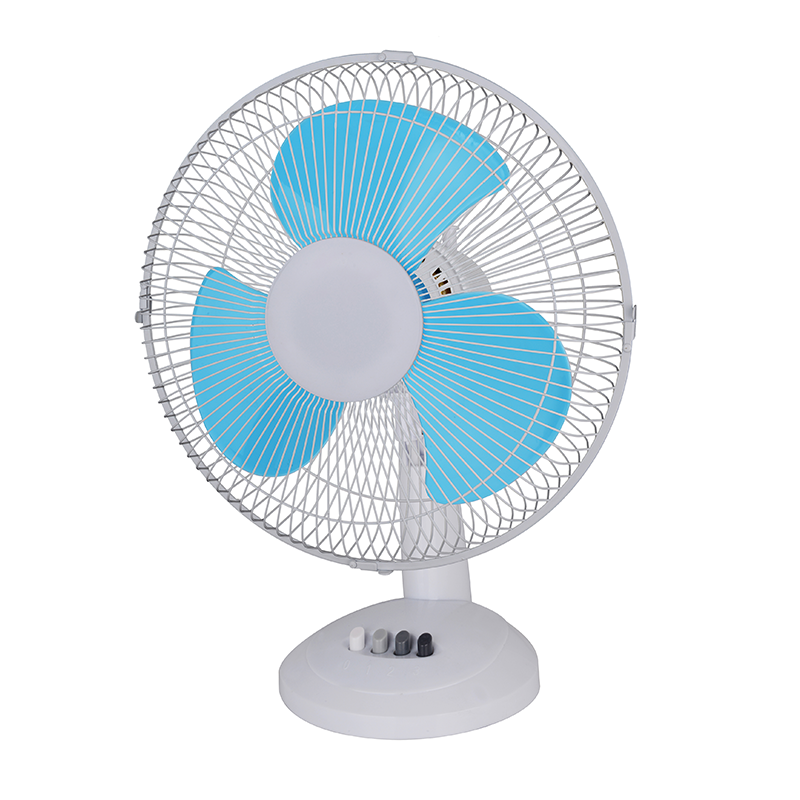
Energy performance dictates market viability for modern appliances. A DC Motor Electric Fan offers a superior energy-to-airflow ratio. We measure this efficiency in CFM (Cubic Feet per Minute) per Watt. Superior CFM/Watt metrics remain critical for engineers. They help target high Energy Star ratings. They also ensure stringent regional compliance. The motor converts nearly all electrical input into rotational energy. Less energy escapes as waste heat. This directly reduces the power draw.
Simple HTML Chart: Motor Efficiency Comparison (CFM/Watt) | ||
Motor Type | Average CFM/Watt (High Speed) | Average CFM/Watt (Low Speed) |
|---|---|---|
Standard AC Motor | 40 - 60 | 15 - 30 |
BLDC Motor | 80 - 120 | 150 - 250 |
EC Motor | 85 - 120 | 140 - 240 |
Modern consumers expect interconnected devices. Direct current architecture provides seamless integration with smart sensors. You can easily connect temperature and humidity modules. The controller adjusts the fan speed in real time. It allows infinite variable speed control. It avoids the voltage clipping associated with older technologies. You can program exact RPMs based on environmental feedback. This makes the system fully IoT-ready out of the box.
Adding electronic components introduces new vulnerabilities. The BLDC controller often becomes the reliability bottleneck. It handles AC-to-DC conversion and pulse sequencing. If you specify low-quality capacitors, the driver will fail. Driver failure usually happens long before the motor windings degrade.
Failing to account for voltage spikes in the primary circuit.
Specifying undersized heat sinks for the electronic controller.
Using low-tolerance printed circuit board (PCB) components.
Engineers must specify high-tolerance PCB components. Proper thermal management of the controller board is mandatory. You must protect the electronics from excessive ambient heat.
Some applications require pushing and pulling air. Direct current motors excel at reverse operation. They offer an immediate response. You simply reverse the electronic pulse sequence. The motor delivers efficient high-torque output across all RPM ranges. It handles rapid directional changes without overheating. This proves invaluable in destratification fans and reversible exhaust systems.
Legacy architectures offer the lowest barrier to entry. They remain highly commoditized worldwide. This commoditization ensures incredibly stable lead times. You benefit from multi-source availability.
Component Availability: Parts exist in nearly every global market.
Supplier Diversity: Thousands of factories produce interchangeable components.
Tooling Simplicity: Existing manufacturing lines require zero modifications.
Procurement teams secure aggressive bulk agreements easily. The initial bill of materials stays remarkably lean. You avoid sourcing scarce microchips or complex logic boards.
Simplicity creates inherent physical resilience. These units feature zero requirement for built-in rectifiers. They avoid complex PCB assemblies entirely. You just connect the leads to the power source. They perform exceptionally well in harsh industrial environments. They handle dirty power grids without hesitation. High electrical noise frequently causes sensitive PCBs to fail. A grid-direct motor simply powers through these electrical anomalies. It requires minimal filtration or surge protection.
Physical simplicity comes with operational drawbacks. These motors are notoriously inefficient at lower speeds. When you reduce the speed using a capacitor, efficiency plummets. The system dissipates excess energy as heat. This heat generation introduces secondary problems. It can significantly impact the ambient thermal load. In enclosed appliance designs, this excess heat damages nearby components. Engineers must often design additional passive ventilation just to cool the motor.
Sound quality heavily influences consumer satisfaction. Alternating current creates a distinct acoustic signature. It is highly susceptible to electromagnetic hum. You will hear this prominently at 50Hz or 60Hz frequencies. This hum worsens when stepped down to lower speeds. Standard capacitive controllers alter the voltage waveform. This alteration causes the internal metal laminations to vibrate. The resulting buzz is often unacceptable in quiet environments like bedrooms or recording studios.
Direct current solutions generally run much quieter. They benefit from a brushless design. This design drastically reduces internal mechanical friction. They also generate less operational heat. Less heat means fewer expanding and contracting metal parts. The overall sound profile remains smooth and consistent. You hear the wind moving, rather than the motor grinding. This makes them ideal for premium consumer electronics.
Despite their quiet nature, brushless systems carry unique acoustic risks. We must offer a transparent assessment of a common pitfall. Poorly tuned controllers introduce high-frequency electronic whine. This happens frequently at low RPMs. The controller uses Pulse Width Modulation (PWM) to regulate speed. If the PWM switching frequency falls within human hearing range, it whines.
Push the PWM switching frequency above 20 kHz.
Implement acoustic chamber testing during the prototyping phase.
Isolate the motor mounts using high-grade rubber dampeners.
You must ensure your engineering team specifies a high-frequency driver. Proper acoustic isolation prevents the chassis from amplifying electronic resonance.
Motor Decision Framework Matrix | ||
Motor Type | Best For | Avoid When |
|---|---|---|
Alternating Current | Budget appliances, binary on/off systems, high-heat environments. | IoT integration is needed, strict acoustic limits apply. |
Direct Current | Battery systems, compact electronics, telecom cooling. | PCB protection is impossible, power grids are highly unstable. |
EC Variants | Premium HVAC, continuous-run ventilation, smart home systems. | Upfront component budget is severely restricted. |
Choose this architecture for budget-tier appliances. They excel in industrial exhaust systems requiring maximum durability over efficiency. Use them where the fan operates strictly in binary states. If the system only needs "on" and "off", complex controllers waste resources. They fit perfectly in high-temperature ovens or rugged outdoor enclosures. Sensitive electronics would melt in these scenarios. A copper-wound mechanical motor survives extreme conditions effortlessly.
Specify this technology for battery-operated or off-grid systems. They dominate telecom cooling and automotive HVAC applications. They are essential for compact consumer electronics. In these devices, space and heat dissipation remain critical constraints. The smaller footprint of a brushless motor frees up design space. The low power draw preserves battery life. You must use them when designing portable or solar-powered ventilation solutions.
Advanced electronically commutated motors fit premium applications. Use them for high-end residential HVAC systems. They power modern smart ceiling fans perfectly. They handle continuous-run ventilation systems requiring IoT integration. They ensure maximum energy compliance under strict global standards. When your product roadmap demands smart home connectivity, EC is mandatory. It provides grid-direct convenience alongside digital precision.
Careful prototyping prevents costly manufacturing errors. You must establish rigorous thermal testing protocols. Heat destroys electronic controllers quickly. Set up acoustic chamber baselines early in the process. Record the sound profile across all speed settings. Listen carefully for switching whine or magnetic hum. Build robust controller failure-rate modeling. You need to know the exact lifespan of the PCB components. Complete all these steps before locking in the supply contract.
The choice between an alternating current motor and a direct current equivalent is no longer just a pricing exercise. It dictates the smart capabilities of your final product. It strictly determines regulatory compliance across global markets. Upfront simplicity often limits future feature expansion. Advanced electronic control introduces risks but guarantees superior efficiency.
You must align your motor specification with the intended product lifecycle. Opt for legacy technology when you need robust, grid-direct simplicity. Choose advanced brushless or EC variants for maximum efficiency and digital control. We strongly recommend consulting with an engineering specialist immediately. Request a motor sample kit to run application-specific airflow and acoustic testing today.
A: Alternating current models typically last 40,000 to 50,000 hours, limited mostly by bearing wear and heat degradation. Brushless direct current models can exceed 70,000 hours because they lack physical brushes. However, the direct current fan's lifespan heavily depends on the external electronic controller. If the PCB components fail prematurely, the system stops working regardless of motor health.
A: You can use off-the-shelf BLDC controllers for basic speed regulation. However, using proprietary or custom-tuned controllers ensures better acoustic performance and precise RPM matching. Off-the-shelf components often lack the specific switching frequencies required to eliminate electronic whine in high-end consumer products.
A: A standard direct current motor requires an external power supply to convert grid voltage. An EC (Electronically Commutated) motor features built-in AC-to-DC conversion circuitry. This allows engineers to connect the EC motor directly to standard grid power while still achieving the high efficiency and variable speed control of a direct current system.
A: Yes. Because they rely on sensitive electronic controllers and microprocessors, sudden voltage spikes can easily fry the PCB components. Alternating current variants lack these delicate electronics and simply absorb or dissipate minor surges. Engineers must include robust surge protection circuitry when integrating brushless designs.
A: Motor choice drastically alters the acoustic baseline. Alternating current units introduce low-frequency electromagnetic hum, negatively impacting the Sones rating. Brushless variants eliminate this hum and reduce mechanical friction, lowering the overall decibel output. Proper controller tuning is required to prevent high-frequency PWM whine from ruining the acoustic score.

